Book your 2026 & 2027 adventures Risk free.
Volunteering In Tanzania - Legal Aid Project Arusha


GVS organizes language- culture- and volunteer work stays in Tanzania in collaboration with local NGOs. Volunteering is a unique way to discover a country, its culture and people while doing a meaningful job. You must be at least 18 years old, independent, outgoing and have a sincere desire to do volunteer work. Participants come from many different countries.
Legal Aid Project
The purpose of this project is to teach widows and orphans of men who have died from AIDS/HIV about their legal rights. These international human rights include the right to work, to an adequate standard of living, to participate in cultural and political life, to education and freedom of religion. The Legal aid clinics coach and empower clients with the necessary knowledge of legal and court procedures to enable them to represent their cases in Court.
The volunteer work at this project involves legal counselling and reconciliation sessions on legal issues like labour law, employment, matrimony, land, contract, children’s rights, tort, probate, etc.
Volunteer placement and field research opportunities are not restricted to people who have legal academic background and human rights experience — though most of the interns, assistants, and students have completed law studies. The project also provides psychosocial support to widows, vulnerable children, orphans and their foster parents.
The following fields of expertise are represented at the Legal center:
This project is located in Arusha and accommodation is in a volunteer house or with a host family in Arusha. The walking distance to the work place in the center of town is 10 to 15 minutes. You can also take a minibus (dala dala) which costs ca. 5 USD per week.
Arusha is one of the bigger cities in the north of Tanzania at the base of Mt. Meru, not far from the border with Kenya. It is well known as an African congress center containing the site for the International Tribunal for the Rwandan Genocide.
The program
Programs start every 1st and 3rd Monday of each month, with arrival Sunday prior to the program start at KIA (Kilimanjaro International Airport) or Dar es Salaam airport. Upon arrival you will be picked up at the airport and driven to the volunteer house or coordinator’s place. During 1-3 days, depending on the length of your voluntary work, you will get a general briefing. These first days will offer you glimpses into the Swahili language, as well as Tanzania's various cultures, religions, and local ways of life. This introduction will be held in Dar es Salaam, Arusha or Bagamoyo, depending on your work area.
Food and accommodation during volunteering
Accommodation is with host families or in volunteer houses where volunteers share a room and sanitary facilities with other volunteers. There is local food 3 times a day. Tanzanian food includes meat, chicken, seafood and vegetarian dishes. Showers do no not always have hot water.
Country
Shortly after achieving independence from Britain in the early 1960s, Tanganyika and Zanzibar merged to form the nation of Tanzania in 1964. Tanzania is bordered by Burundi, Congo, Kenya, Malawi, Mozambique, Rwanda, Uganda and Zambia. Tanzania’s surface is 886,037 sq km, including the islands of Mafia, Pemba and Zanzibar.
Climate
The climate varies from tropical along the coast to temperate in the highlands. The coastal region is tropical with relatively high humidity. The average temperature is moderated by the sea breeze, especially on the islands, and ranges between 27 and 29 degrees Celsius. In the mountainous areas of the Arusha, Kilimanjaro and Mara regions the temperature occasionally drops below 15 degrees Celsius at night during the months of June and July. There are two rainy seasons — from mid March through May and in November – December, when it rains only a few hours during the day.
Population
Life expectancy is only around 45 years, due to the many deaths from AIDS. UNAIDS and WHO figure that nine out of ten children under the age of 15 carry the virus. 99% of the mainland population is African; 95% are Bantu from more than 130 tribes. The remaining 1% consists of Asian, European and Arab.
Religious beliefs are African Christian 30%, Muslim 35%, indigenous beliefs 35%. The island of Zanzibar is mainly Arab and has more than 99% Muslims.
Language
Kiswahili or Swahili is the official language, while English is the official language of commerce, administration and higher education. Arabic is widely spoken in Zanzibar. The first language of most people is a local language.
Before you travel
Even though GVS always tries to give the best service, also in Tanzania, don’t expect European living standards or precise work schedules. Upon receipt of your enrolment, we will mail you a confirmation, an invoice, and a pre-departure handbook.
It is a big challenge to live and work in a poor country. It demands courage, some experience and the ability to adapt. It can be overwhelming, especially at first, to have to adjust to completely new conditions, communicate in a foreign language etc. Things are not as you are used to, the climate, the food, the atmosphere – everything is different. During your work you will be faced with a harsh social reality and experience things a tourist would never see.
To take part in the voluntary work program, maturity, flexibility, independence and the desire to do social work are necessary. Your stay is an experience you will never forget. Volunteering in Tanzania enables you to experience this great country up close and personal.
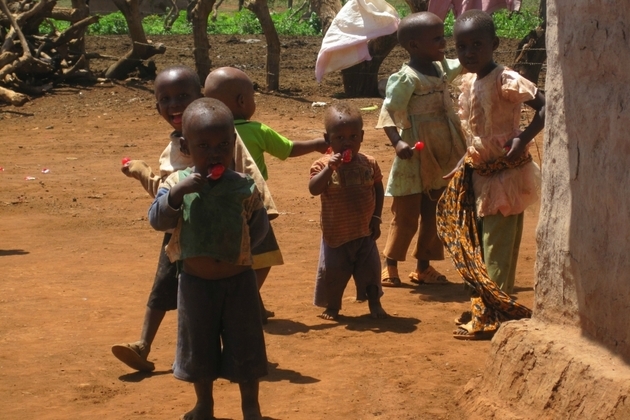
Get to know the smiling, friendly people in tiny villages, nearly untouched by modern life, or tour the busy, bustling cities of Dar es Salaam, Arusha, and Moshi.


