Book your 2026 & 2027 adventures Risk free.
Bamenda Ring Road Trekking Expedition


Summary
Discover this very important road that links all the divisional headquarters of the North -West region of Cameroon.At the end of the tour you will realize that you’ve gone through some of the most beautiful and exotic landscapes in the world, which are quite suitable for adventure and nature lovers,that you’ve got much fulfillment as concerns cultural immersion,that you’ve been exposed to one of the most conducive climates in the world which is so comforting to your health...
ITINERARY
1st day-Arrival at Douala and overnight in the hotel.
2nd day- Douala to Bamenda and overnight.
Brief stops on the way to see interesting landcapes and roadside markets.
3rd day-Bamenda- Tubah Upland Watershed-Ndop.
What to do-Visit the warehouse of an antiquity collector at Kedjom-Keku before going to the Tubah Upland.The collector will interprete the socio-cultural significance of his antiquities and also give a brief history of the vellage.
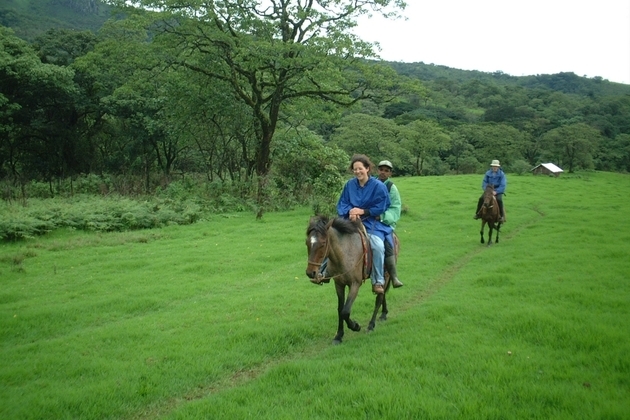
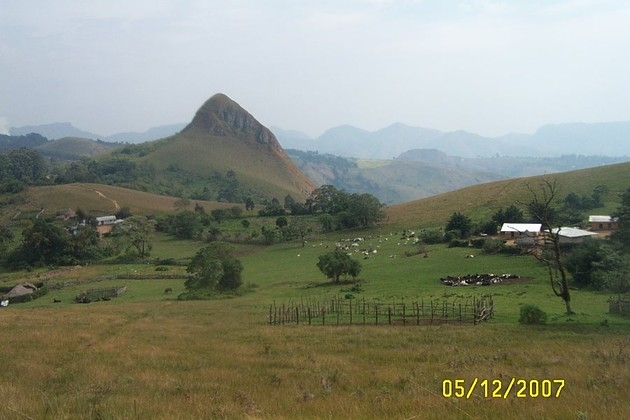
While at the Tubah Upland Watershed undertake the following activities- Trek through the extensive beautiful meadows in the company of the Fulanis and watch them take care of their large herds of cattle.They may introduce you to horse riding, in which case you will use these horses to discover more distant areas such as the large cave found at about 3kilometres from their residents. By so doing you will also discover the extensive beautiful Afro-montane forest, which is home to many endemic bird species, especially the Bannermann Touraco, and many beautiful insects, some of which you
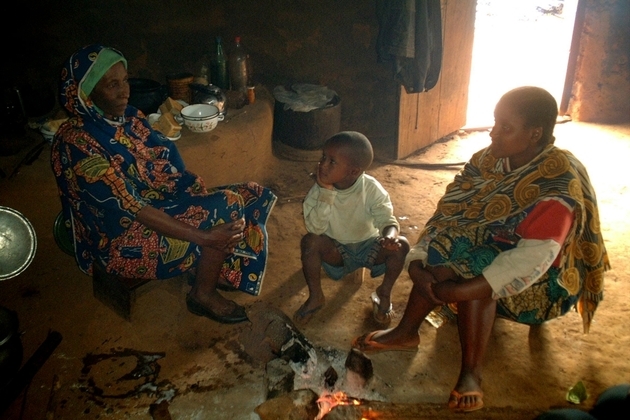
may collect as a sport activity. Spend some time with the Fulanis in their round huts, the interiors of which are interesting to discover because of the orderly manner in which the women arrange their utensils.
You may partake in the making of one of their most delicious meals, corn flour in boiled water eaten with well-spiced vegetables or okra .
Their folklore and dance is also very interesting to watch and also practice.
Procede to Ndop in the evening for overnight in a modest hotel.
4th-5th day- Ndop-Bamessing-Kedjom Keku
What to do-
Visit the rice factory at Ndop and see all the stages inherent in rice hauling and packaging.
At Bamessing trek around the village and visit the Presbyterian Missioin- assisted self help project which teaches the natives on craft making. Ceramic making is the dominant activity and you will discover all the stages including the collection of raw materials and their processing to finished products.
Visit craft producers in their individual homes and watch them produce other crafts such as bags, baskets, table covers, etc. May practise to produce an item.
At Kedjom Ketinguh trek to the beautiful rock structures and continue to Sabga. Trek from the top to the base of the Sabga Hill and procede to Ndop in the vehicle for overnight.
6th day- Ndop-Babungo-Ndawara Upland Tea Estate-Fundong.
Visit the Babungo palace and museum, wood carvers and blacksmiths at work.
At Ndawara get to know all the different sections of the upland tea enterprise, the largest in Central and West Africa, such as nurseries, young and mature plantations, workers harvesting, all aspects of the transformation process. Have a taste of the tea before leaving the factory.Ride through the beautiful hills to Fundong for overnight in a modest hotel.
7thday-Fundong to Belo and back to Fundong for overnight.
What to do
Return to Belo and do the Mbingo Cliff Top Trekking. It is the best trekking experience in this region and starts from the breathe- taking Mbingo hill top and passes through the picturesque adjoining hilly areas to Belo. It lasts for 5 to 7 hours. It enables one to see far and wide the underlying areas occupied by sprawling villages with many beautiful farmlands. One may discover villagers on their farms.
While back at Fundong visit the highly venerated traditional ruler. His Kingdom is one of the largest in Cameroon. A ritual initiation is performed on any visitor willing to get into the interior of the palace, where the mystical antiquity called Afo-Akom is found. This piece of carved object was stolen to one western museum, and while there it caused a lot of havoc by knocking down other antiquities, due to the fact that it was not feeling comfortable where it was. It was later brought back to Cameroon. It is believed to have much magical power which protects the entire Kingdom from any mishap.
The ritual initiation will also confer on one the honorary citizenship of this Kingdom. And will have the possibility of discussing the traditional ruler.
Overnight in Fundong.
8thday-Fundong-Wum
What to do
-Visit Menchum Fall, Lake Wum and the Aghem Palace where the elderly Queen Mothers thrill the visitors with their exceptionally beautiful folklore and dance.
Overnight in a modest motel.
9thday-Wum-Lake Nyos-Subum- Fonfuka.
What to do
Visit the *dreaded Lake Nyos* which exploded in August 1986 and killed about 1700 people and many animals. There are efforts being made by the government of Cameroon, with support from the international scientific community to eliminate the gas in order to forestall future disasters.
Visit Subum, the village which was abandoned by those who survived in 1986, but is now regaining life with its former inhabitants, who became refugees in other far-off villages, returning. Get to know their coping strategies, and donate give them any assistance.
Procede to Fonfuka for overnight in a modest inn.
10th day Fonfuka-Dumbu-Nkambe.
What to do
Pay a courtesy call to the palace from where a guide is appointed to lead the visitors to the small sacred l forest, believed to be the source of rain during periods of excessive drought. According to local folk tale, when there is much drought the traditional ruler takes a white fowl to this forest and pleads to the Gods of the land for rain. It is believed that rain starts falling instantly if the plea is sincere, and extends to other adjoining areas.
Discover the place where a river disappears into the ground for about 500metres and reappears. It is believed that in the past the dead where buried in this area by simply being plunged into the openings between the rocks, and that during a certain day in a week a lot of music comes from this area, believed to be played by the ancestors.
Another interesting place to visit is an igneous rock structure on which there is a large imprint resembling the foot of a giant. The natives believe that it was produced by one of their ancestors who rose to heaven from that spot.
At Dumbu trek through the meadow, part of which harbours one of the biggest cattle ranch in the Central African sub region. Visit the different parts of the ranch. Climb on the mount called Mayokila, from the top of which one sees as far as some parts of Nigeria.
On the way to Nkambe stop briefly to admire the beautiful landscape extending to as far as the eyes could see.
Overnight in a hotel at Nkambe.
11th day-Nkambe and its environs
What to do
Trek to a number of waterfalls and learn about their cultural significance. Trek through some very fascinating landscape. Visit a group of local people and see how they extract palm oil using local methods, a process during which they sing melodiously.
Return to Nkambe for overnight
12thday-Nkambe-Lus-Nigerian/Cameroon border.
What to do
Visit Moyobinka and see the remnants of the meteorite.It is the source of iron used by blacksmiths in producing a number of tools such as knives, hoes, axes, etc. Continue to Lus and procede to the border between Cameroon and Nigeria, which is the River Donga that takes its rise from Taraba State in Nigeria. Return to Nkambe for overnight.
13th- day Nkambe –Oku
What to do
At Oku do a village walk which includes visiting the traditional rulers palace, craft making homes where the producers are work and the exhibition centres or sales centres,Discover other aspects of the local economy such as coffee farms, bee farms, medicinal plant extraction, the oldest house in the village which is still in its original traditional architectural form and the cultural importance attached to it.
Overnight in a modest motel.
14th day-Oku
Climb the Oku Mountain, at some point of which is the Kilum Mountain Forest, famous for having received much funding for the conservation of its rich biodiversity, which includes endemic bird species, especially the Bannermanns Touraco and the threatened tree species called Pygeum Africana. The threat on this tree species came from the fact that western pharmaceutical companies were desperately searching for its bark as a raw material for the manufacturing of drugs for prostate cancer.
The Oku lake is found at some point on the mountain, and its surroundings constitute a field research centre by natural scientists.
May camp near the lake or return to the village for overnight.
15thday Oku-Bamenda
At Bamenda visit craft shops and local markets for souvenirs.And in the evening watch a scintillating mask dance.
16th dayBamenda-Douala and departure.


